
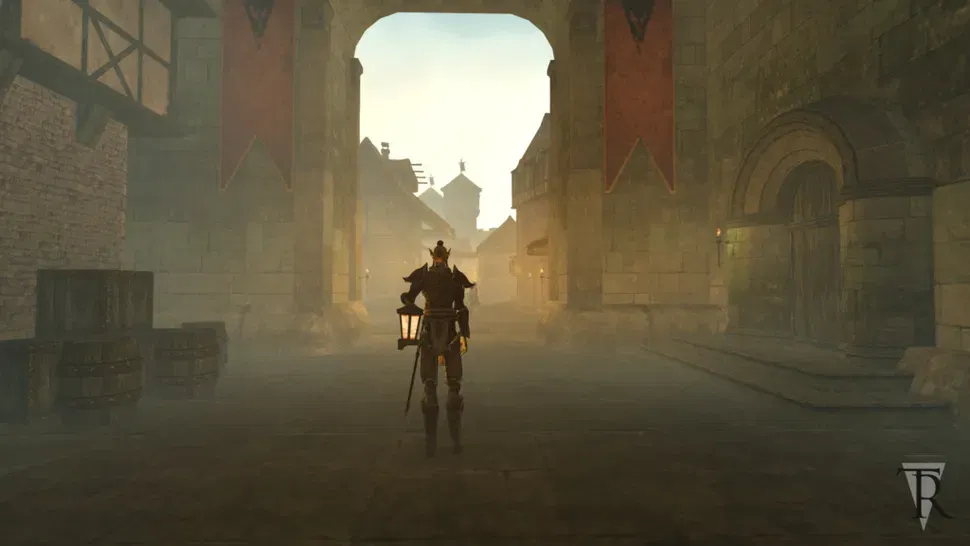
For over two decades, a group of dedicated modders have worked tirelessly to complete what Bethesda left unfinished in The Elder Scrolls 3: Morrowind. The Tamriel Rebuilt project represents one of the most ambitious efforts in the history of gaming modding, with the aim of recreating the entire province of Morrowind faithfully following the style and philosophy of the original developers of the early 2000s. After releasing the ninth expansion called Grasping Fortune at the beginning of the year, the team is now preparing to launch the tenth: Poison Song.
The real revolution of this new expansion lies in a feature that fans have been waiting for since the original game came out in 2002. For the first time, players will be able to join House Indoril, one of the great political families of Morrowind that remained inexplicably out of reach of players in the original title. This is not a marginal detail: House Indoril was that of the legendary Indoril Nerevar, a central figure in the entire mythology of the game.
In the original Morrowind, Bethesda allowed players to affiliate with three of the province’s five great Houses. There was the trade-oriented, Empire-friendly House Hlaalu; the House Redoran, composed of traditionalist warriors; and House Telvanni, made up of eccentric wizards known to live in giant mushroom towers. Missing from the list were House Indoril and House Dres, the latter infamous for its even more fanatical devotion to slavery than the Telvanni themselves.
The narrative importance of this addition cannot be understated. Much of Morrowind’s main plot revolves around the prophecy that the protagonist is the reincarnation of Nerevar himself. Finally being able to enter the legendary hero’s home creates a thematic connection that many considered a significant gap in the original experience. The fact that it took more than twenty years to fill this void is a testament to both the complexity of the project and the dedication of the modder team.
What makes Poison Song particularly interesting isn’t just the nostalgic aspect. The quality of writing in Tamriel Rebuilt has proven over the years to be up to Bethesda’s standard, with content rich in that esoteric mythology that characterized the original work. Project managers confirmed that work is progressing according to plan on all fronts, and that the expansion is expected to be completed within a few months.
The philosophy behind Tamriel Rebuilt has always been to expand the game while strictly respecting the spirit of the era, when video game developers could afford to create complex, layered worlds without worrying too much about the accessibility curve. The result is an experience that integrates perfectly with the base game, so much so that it is indistinguishable in terms of narrative quality and design.
For those who know the Elder Scrolls saga only through more recent chapters such as Skyrim or Oblivion, Morrowind represents a radically different experience. The game didn’t guide the player by the hand, didn’t mark objectives on the map with flashing arrows, and required a deep dive into its complex lore. Tamriel Rebuilt maintains exactly this philosophy, making it a cultural preservation project as much as a gaming expansion.